RSS Feed

Category Archives: main dishes

Beet Burgers with Corn Salsa and Red Cabbage Cole Slaw


Beet Burgers have a real meaty taste and look! I love them! The secret is roasting the beets!

Served here with Elote/Corn Salsa, you don’t need ketchup or mustard. I used fresh corn and Parmesan shavings in the salsa. For the cole slaw recipe I substituted red cabbage for the green.

I found these fantastic sites on Instagram!

Go to Chocolate for Basil.com   Look for Beet Burger with Elote Salsa

Here is the link:

http://chocolateforbasil.com/recipe/beet-burgers-with-elote-salsa/

 CravingsinAmsterdam has a recipe for Tamarind Roasted Chickpea Tacos with Apple & Cabbage Slaw. I used the slaw recipe and substituted red cabbage for the green.

Here is the link:

http://cravingsinamsterdam.com/?s=tamarind+roasted+chickpea+tacos&submit=Search


Stracotto, an Italian Beef Stew With Puréed Cauliflower, Mashed Potatoes or Pasta


Stracotto means OVER COOKED in Italian and is the reason this beef stew is so tender and succulent!  It is usually served with potatoes or pappardelle pasta, but the Italian beef and tomato sauce is paired here with Puréed Cauliflower! Fewer carbs and more veggies to get you to the goal of 4 cups of vegetables a day!

This recipe is adapted from The New Basics Cookbook by Julee Russo and Sheila Lukins. There are several steps, but so worthwhile!

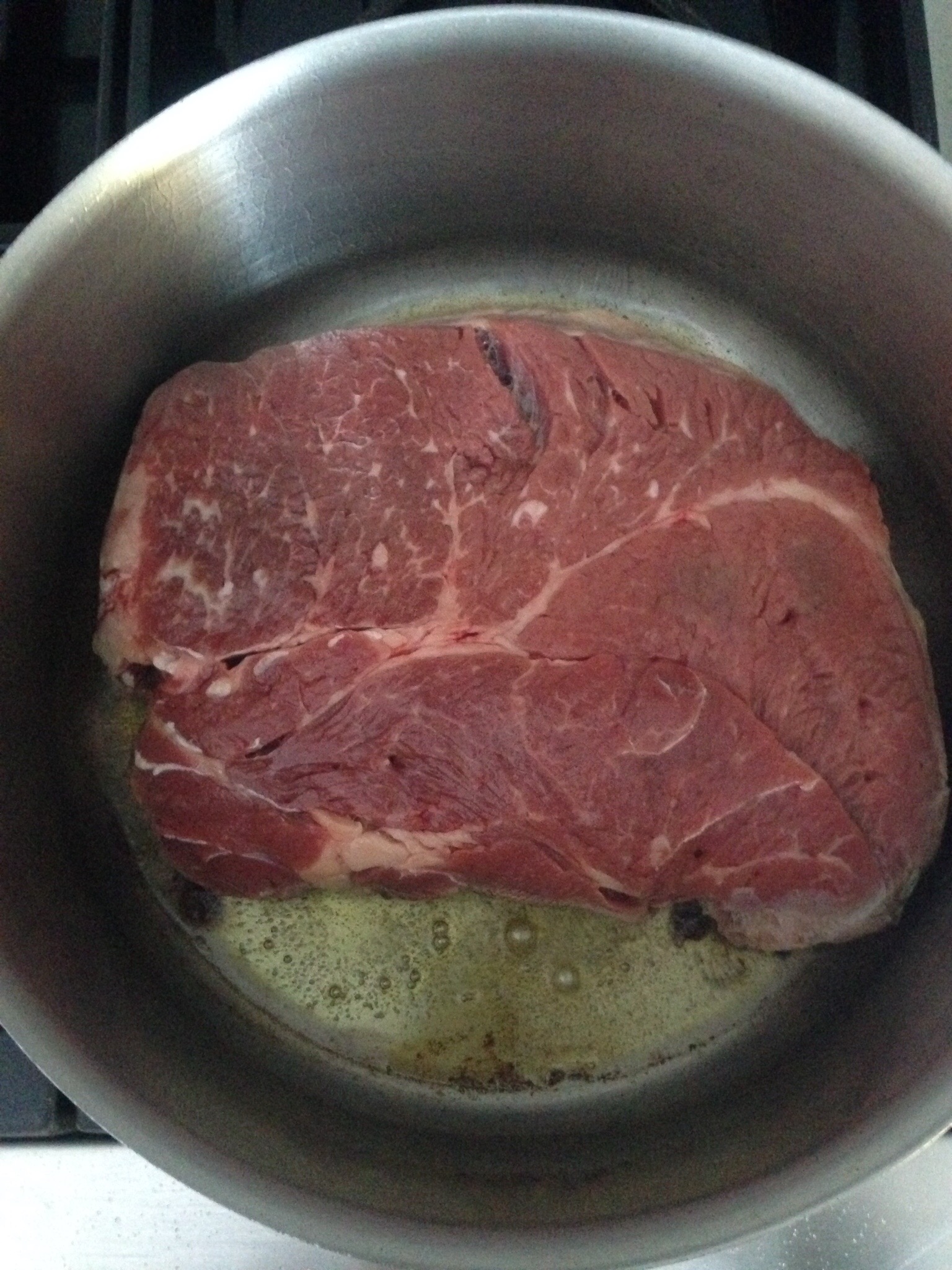
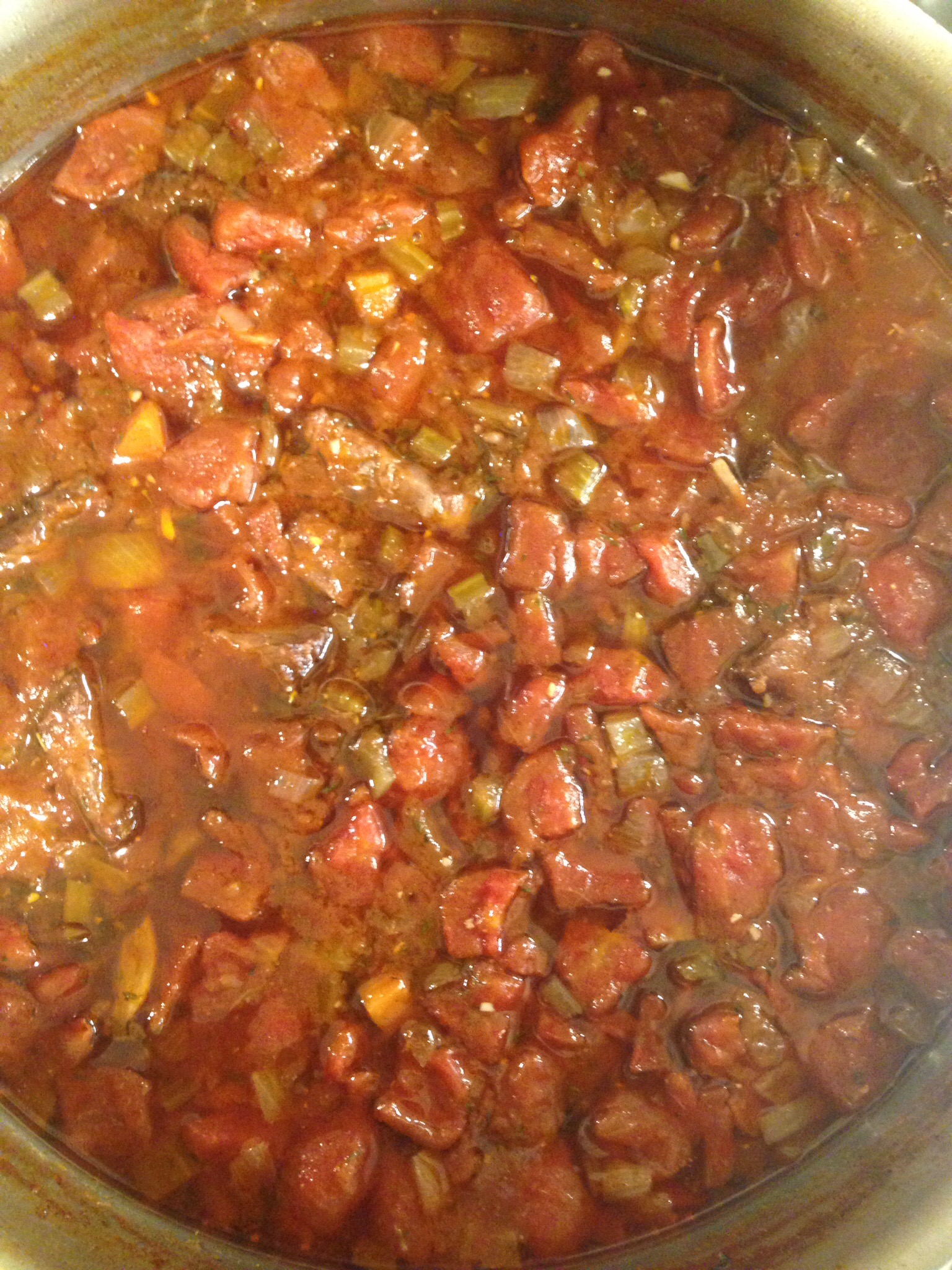
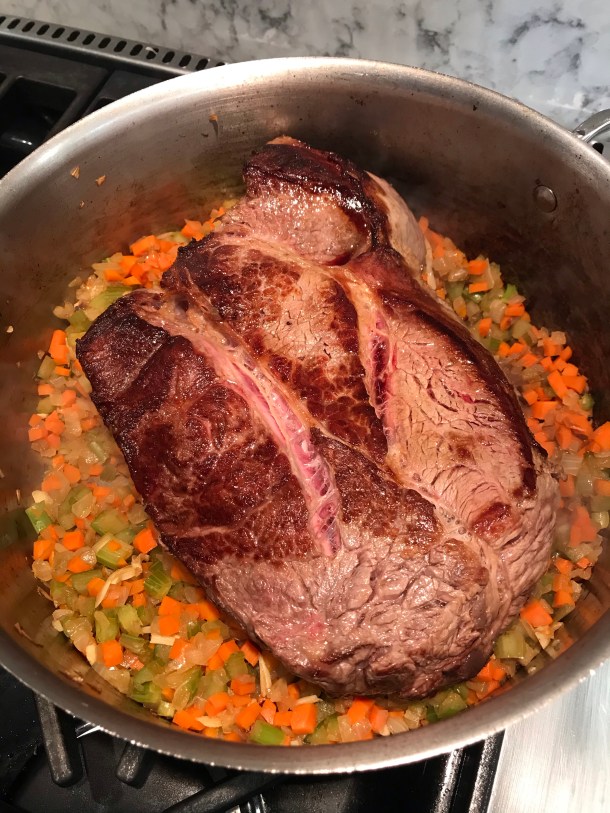
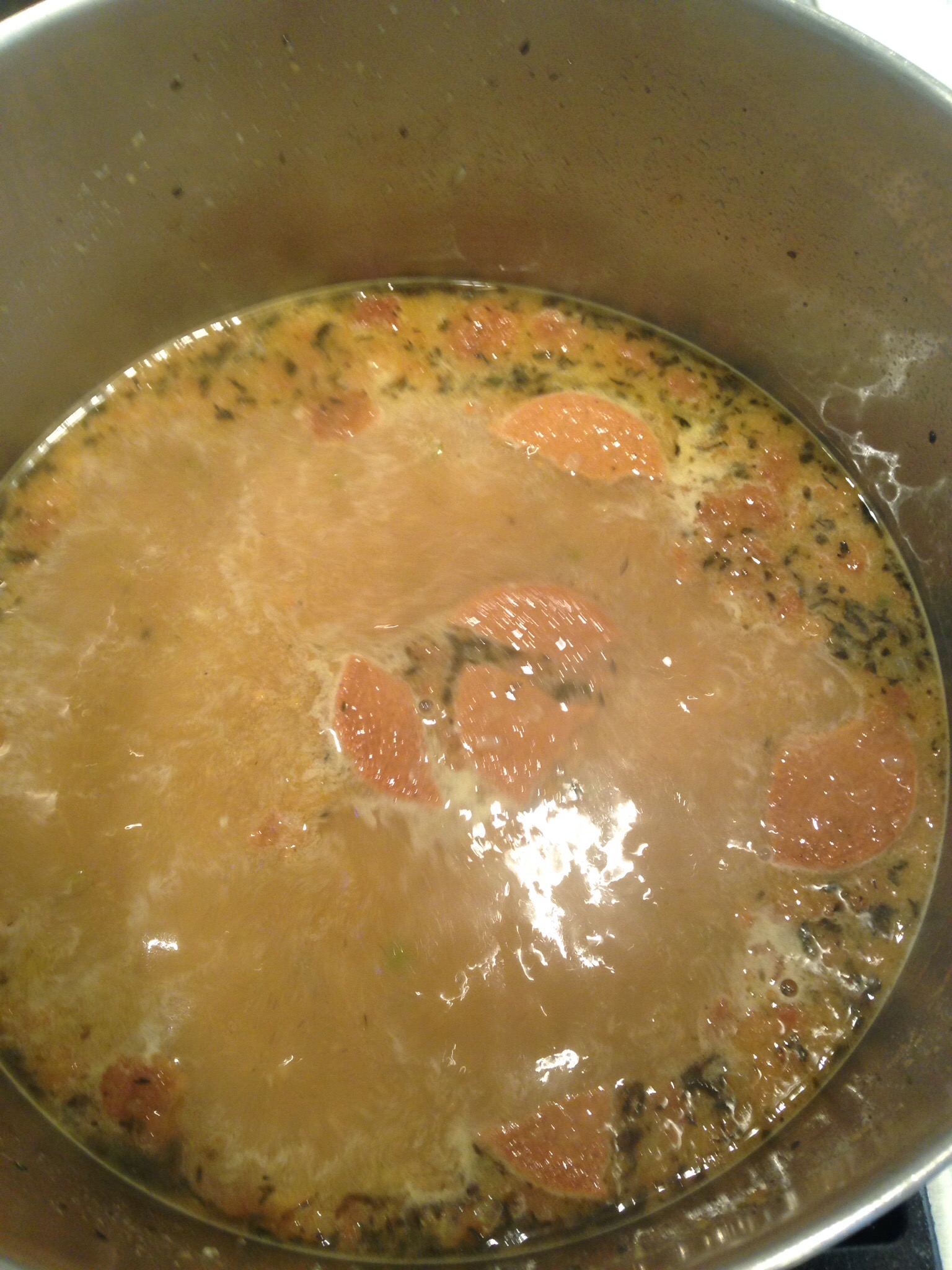
Stracotto starts out by searing a whole beef pot roast. After it simmers in beef broth it’s removed from the pot and sliced into pieces.

Here’s what that looks like. I used red peppers instead of green this time:


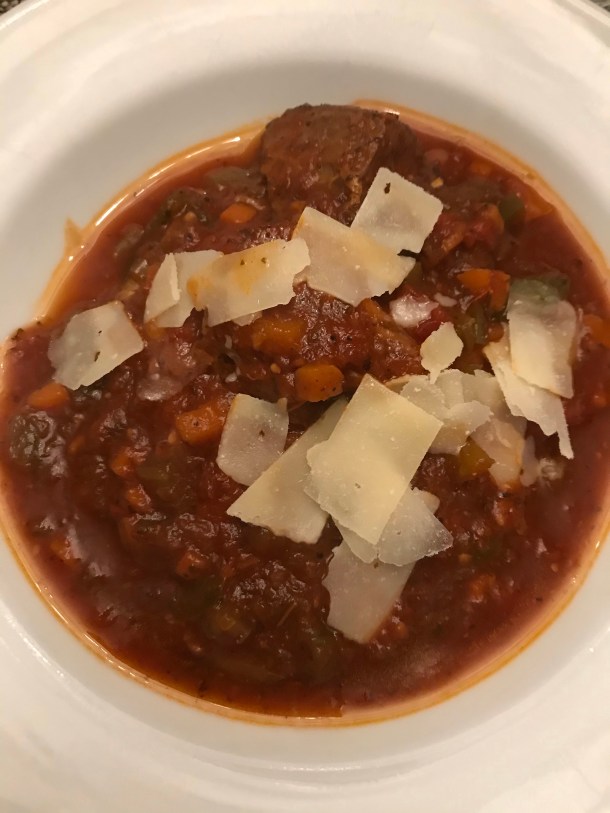
This beef roast is sliced during the cooking and after simmering 3 hours is dished up with mashed potatoes and topped with the hearty Italian tomato sauce.

Shavings of hard cheese like Parmesan can be dropped on top.

Directions and Ingredients

  • Place a large saucepan or Dutch oven over high heat. 
  • Add 3 tablespoons olive oil and swirl around
  • Add a 3 and 1/2 pound beef chuck roast. 
  • Keep over medium high heat and brown on one side. Don’t touch or try to turn it until it’s deeply browned, about 10 minutes each side.


  • Once it’s crusty brown, 10 minutes, turn it over and brown the other side


  • After it’s browned, remove beef to a plate and set aside.
  • Add to the same saucepan:


4 cups chopped onion

2 cups chopped carrots

2 cups chopped celery

8 cloves garlic, slivered

  • Sauté until softened. 
  • Place the roast back in the saucepan over the vegetables
  • Pour over the roast:

2 cups beef stock

  • Bring to a boil, cover and simmer 1 1/2 hours.
  • Remove the roast and place on a cutting board
  • Trim off the fat and divide roast into 3 to 4 inch wide sections
  • Slice the sections across the grain into 1/4 inch slices


  • Return the slices to the saucepan.
  • Mix in the following:    

2-28 ounce cans diced tomatoes OR 1 can diced tomatoes and 1 can tomato sauce for a thicker sauce (If you like spice measure heaping teaspoons)

2 teaspoons minced garlic

1 teaspoon black pepper

1 teaspoon dried thyme

1 teaspoon dried oregano

1 tablespoon dried basil

1 teaspoon dried rubbed sage

2 sprigs fresh rosemary or 1 tablespoon dried

1/2 teaspoon dried red pepper flakes

5 dried bay leaves or dried Mirto leaves which I found in Corsica and Sicily

2 green peppers chopped

1 and 1/2 cups rich red wine, like Cab, Shiraz, Chianti, Pinot

  • Bring to a boil. Then cover and simmer 1 1/2 hours

  
At this point it’s ready to serve with the traditional penne or pappardelle style pasta or mashed potatoes. It’s super on its own too as a hearty soup!

I used Puréed Cauliflower here which is like a light mashed potato.

Puréed Cauliflower

  • Wash 1-2 large heads of cauliflower and cut into big chunks
  • Place in a medium saucepan with an inch of water. 
  • Bring to a boil, cover and then simmer till tender, about 10 minutes
  • Drain the cauliflower and purée with an emersion or stick blender.

The Pureed Cauliflower using 1 head of cauliflower serves 4-6. The Stracotto serves closer to 12. If you are serving a crowd, use 2 heads of cauliflower. The Stracotto is so involved, I like to make this big recipe and freeze the leftovers or serve to guests at a dinner party. Perfect comfort food for cold winter nights

Voila!

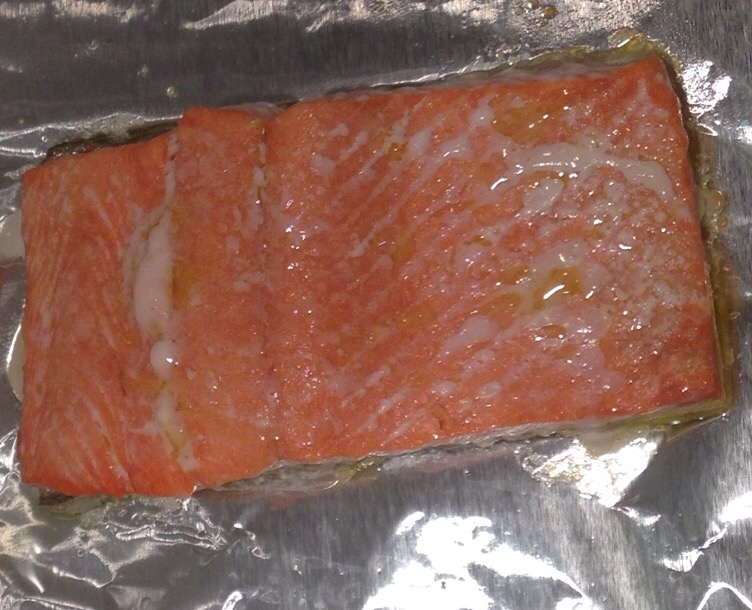
Flash Baked Salmon

  
Super quick and yummy! Cooks Illustrated is my source 😉

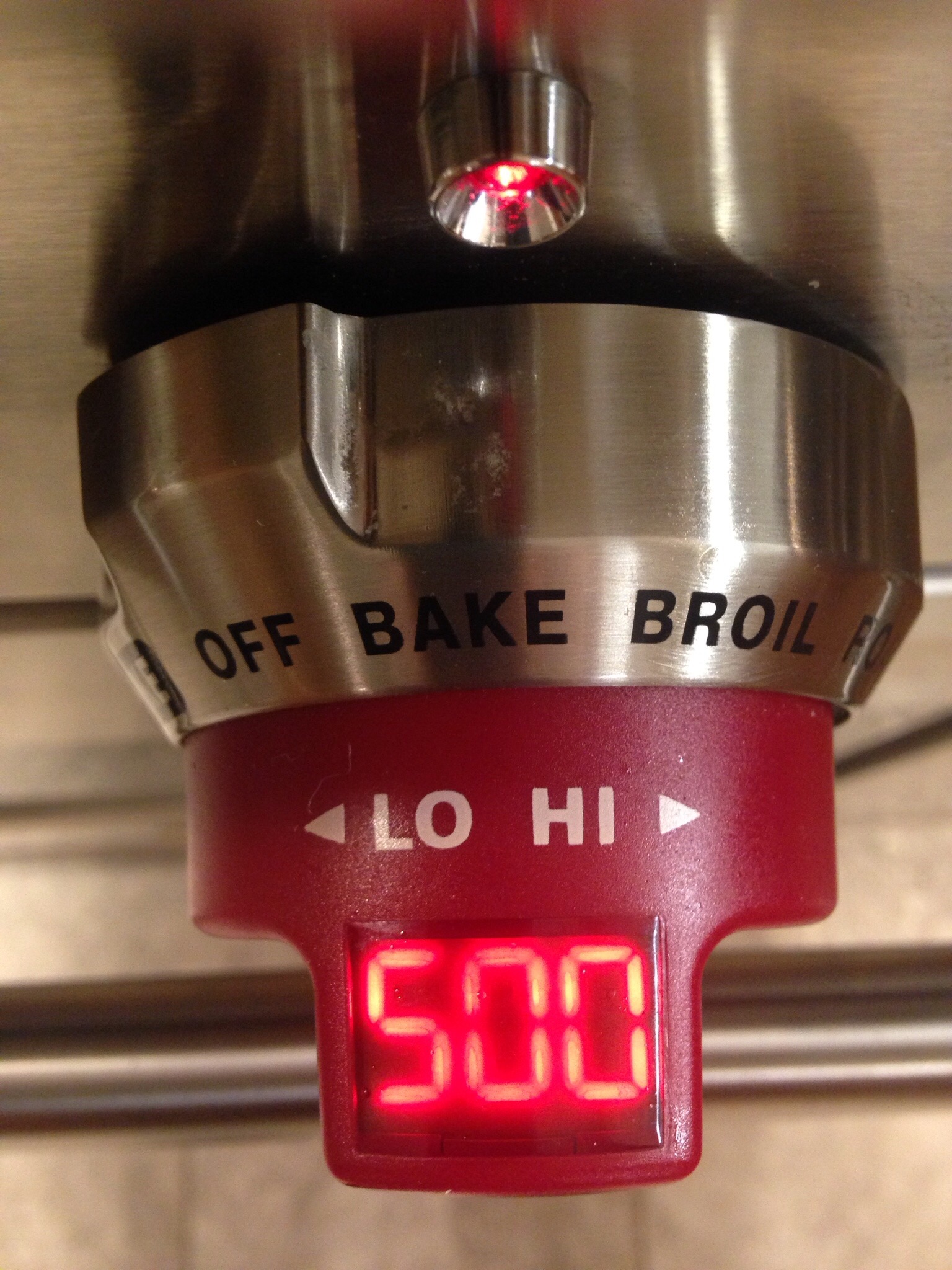
  • Heat your oven to 500 degrees.
  • Cover a rimmed baking sheet with foil and place it on middle rack of oven as it’s heating up.


  • I used Sockeye Salmon with the skin, and cut a 1 and 1/3 pound filet into 4 pieces Norwegian salmon is also a favorite of mine
  • Pat dry with paper towel


  • Rub all sides with olive oil
  • Sprinkle with salt
  • LOWER OVEN TEMPERATURE TO 275 degrees!!!!!


  • Place the salmon skin side down on the hot baking sheet
  • Bake 4-6 minutes or until internal temperature reaches 125 degrees, or to your preference. Be sure to check internal temperature after 4 minutes. Baking time depends on thickness of the fish


  • Voila! Serve at once!

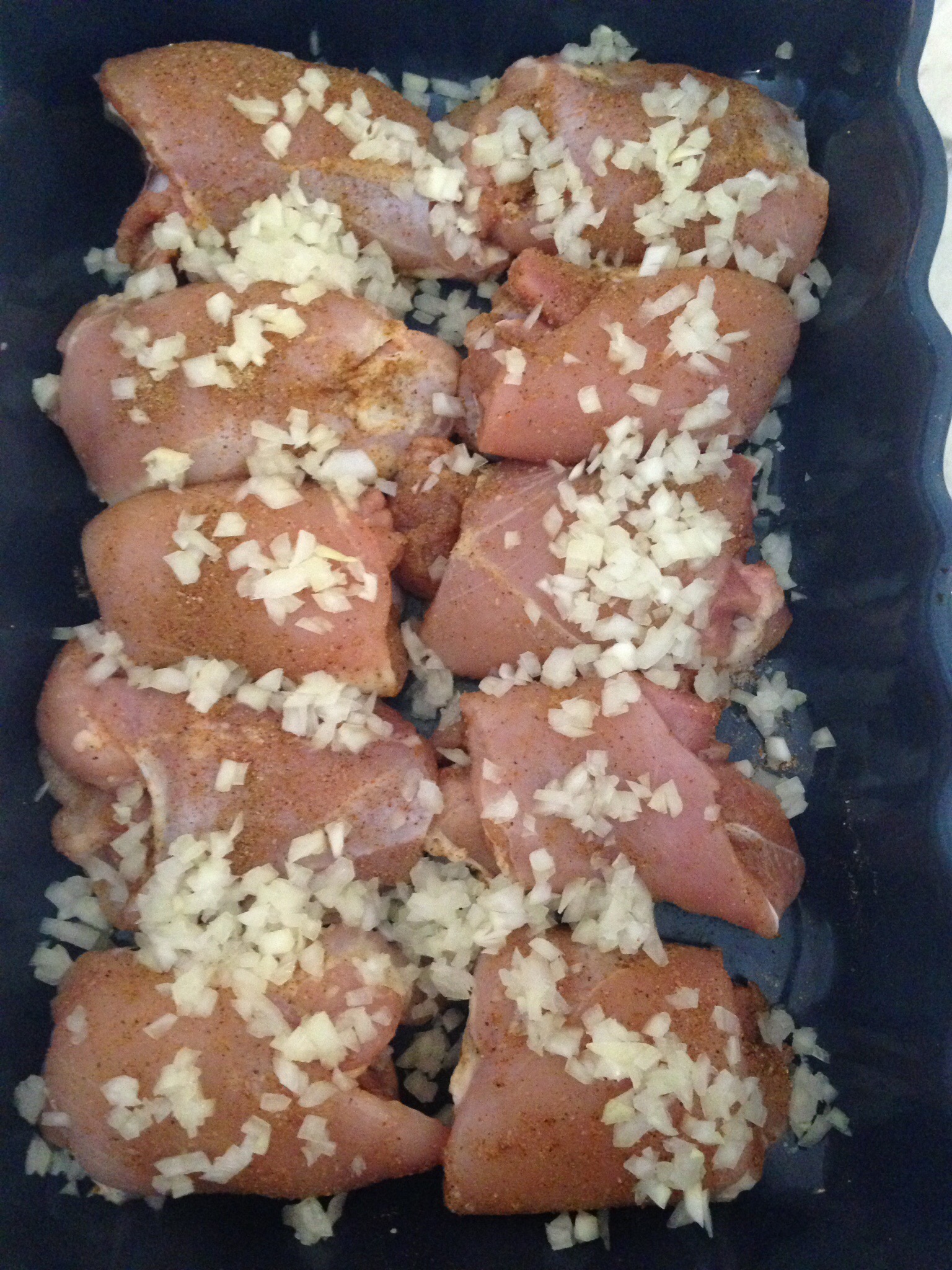
Cajun Spicy Baked Chicken

  
This is another of my Paul Prudhomme’s Cajun recipes that’s best served with Dirty Rice and Gingersnap Gravy. See my Recipes list for links to these. 

If you look at his cookbook, Chef Paul Prudhomme’s Louisiana Kitchen, this recipe is called Boneless Half Chicken. Each serving is one boneless chicken thigh and drumstick wrapped around a boneless chicken breast and tucked in an oval shape. The skin is left on both the breast and leg. My recipe serving size is one or two chicken thighs. The Dirty Rice is very meaty, so if it’s served with this chicken, I think one thigh is plenty!

  • Combine this seasoning mix in a small bowl:

1 teaspoon salt

3/4 teaspoon garlic powder

3/4 teaspoon black pepper

1/2 teaspoon white pepper

1/2 teaspoon onion powder

1/2 teaspoon ground cumin

1/4 teaspoon cayenne pepper

1/4 teaspoon sweet paprika


  • Remove fat, rinse and dry well:

10-12 pieces of skinless boneless chicken thighs

  • Sprinkle and rub seasoning on both sides of chicken as evenly as you can 
  • Form each piece into a rounded oval by turning the two thin sides under
  • Place in a baking pan


  • Sprinkle with:

1/2 cup finely chopped onions


  • Refrigerate at least 2 hours
  • Preheat oven to 350 degrees F. 
  • Bake chicken 20 minutes and test internal temperature with an instant read thermometer. Increase baking time if needed. When it reaches 165 degrees, remove from the oven
  • Serve immediately, with or without the Dirty Rice and Gingersnap Gravy

Gingersnap Gravy


Gingersnap
Gravy is a spicy sauce seasoned with Cajun spices and is thickened with Gingersnap cookies. It’s a Paul Prudhomme Cajun recipe from Louisianna. I serve it with Dirty Rice and Spicy Cajun Chicken. See my Recipes list for these links.

  • In a small bowl combine the seasoning mix:

1 teaspoon black pepper

1/2 teaspoon salt

1/2 teaspoon white pepper

1/2 teaspoon ground ginger

1/2 teaspoon dried thyme

1/4 teaspoon rubbed sage

1/4 teaspoon cayenne pepper

1/8 teaspoon ground cumin

  • In a large skillet over medium heat melt:

2 tablespoons butter or olive oil, your choice. The Cajun style is butter, as is the French.

  • Add and Saute:

3/4 cup finely chopped onions

1/2 cup finely chopped celery

1/2 teaspoon minced garlic


  • Saute 5 minutes
  • Stir in the seasoning mix and cook 5 minutes, stirring


  • Add:

8 cups chicken stock

  • Bring to a boil and then simmer with the lid slightly ajar for 25 minutes
  • Whisk into the broth until dissolved:

12 Gingersnap cookies, broken in pieces


  • Continue cooking 10 minutes, whisking often.
  • Add:

2 tablespoons dark brown sugar

2 teaspoons ground ginger


  • Continue whisking and simmering a few minutes. Taste and add more gingersnaps, brown sugar or ginger if you prefer. Simmer after your additions a few minutes.
  • Strain the gravy through a fine mesh strainer. Line it with cheesecloth too if you have it. You’ll have to press the gravy through the strainer with a spoon. 
  • Store in the refrigerator until you’re ready to use it. Serve with Cajun food or any plain style chicken or rice.


Baked Macaroni and Cheese

The ultimate comfort food for all ages!

  
My young grand kids were coming so I prepared this for them. It was a family favorite when I was a child and when my children were young. Everyone loves it!

This is from a Chicago cooking school back in the day, The Francois and Antoinette Pope School Cookbook, where my mom took lessons. This was before Julia Child, post WWII.

1 pound elbow macaroni, cooked in salted water and drained

In a large saucepan melt 2/3 cup butter

Whisk in 2/3 cup flour and simmer a few minutes.

Whisk in 2 tablespoons dried mustard and 1/2 teaspoon salt. Simmer a minute.

Gradually whisk in 4  1/2 cups hot milk. Stir constantly and simmer 5 minutes.

Add 12 ounces American cheese or Velveeta cheese. Stir until melted.

In a buttered 2 quart casserole layer the macaroni and cheese sauce in several layers. Top with sauce.

Layer 5 American cheese slices on top and bake at 425 degrees for 20-30 minutes or until browned.

Seafood Stew

Jan Doty made this recipe for us this winter and Dave and I have made it several times since! The fresh tarragon provides a bright flavor. Adding the seafood at the very end allows for preparing most of the stew before guests arrive. Thank you again Jan for another outstanding recipe!

Seafood Stew

Seafood Stew

Poaching is an excellent way to cook seafood, since the cooking liquid makes a flavorful base for sauce. This recipe features a French technique called monter au beurre (to mount with butter), whereby chilled butter is whisked into the cooking liquid at the last minute to ensure a satiny sauce. We often double the recipe when entertaining which serves at least 10. A single recipe is written here.

2 tablespoons olive oil

1 cup thinly sliced leek (about 1 large)

3 garlic cloves, minced

1 cup dry white wine

28 ounce carton of low sodium chicken stock and/or seafood stock (Swanson’s Cooking Stock is a favorite) (if you want a thicker soup, add 1/2 the amount of stock)

3/4 pound medium raw shrimp, peeled and deveined or more

3/4 pound large sea scallops, cut in half or more

1 pound cod, cut into 2 inch cubes

1 pound frozen baby clams, thawed (add liquid too)

1 pound frozen mussels, thawed (add liquid too)

2 tablespoons chilled butter, cut into small pieces

1 and 1/2 cup chopped fresh plum tomatoes

2 tablespoons minced fresh tarragon

2 teaspoons grated fresh lemon rind

1 teaspoon salt

1 teaspoon black pepper

1/4 teaspoon cayenne pepper or more as desired

  • Heat oil in a large Dutch oven.
  • Add leek and garlic and cook 4 minutes or until tender, stirring occasionally.
  • Add tomatoes, wine and broth and bring to a simmer at least 10 minutes. Keep at a low simmer covered until ready to serve.
  • When you are ready to serve, whisk the butter in.
  • Add the tarragon, lemon rind, salt, pepper and cayenne and bring broth to a boil.
  • Add the seafood and all it’s liquid.
  • Bring it up to a full boil.
  • Serve immediately with white rice or brown rice and crusty bread or naan/Arabic bread.


Sausage and Kale Saute

Sausage and Kale with Cauliflower Mash and Romano Cheese

Sausage and Kale with Cauliflower Mash and Romano Cheese

Enjoy this kale and meat delish dish, rich in K 1 and K 2. I found this recipe in Real Simple Magazine last fall and I made it even more “simple”, changing it from a crock pot recipe to a quick stove top sauté. Serve it with pasta, mashed potatoes, or my Cauliflower Mash. All are good. Cauliflower has fewer carbs and some alternative nutrients. The Romano cheese is not essential, but it’s a yummy addition.  We like spicy and try to avoid fat, so I used hot Italian turkey sausage which is perfect for us. The sweet Italian turkey sausage would be good too. Don’t be afraid to add a ton of kale. I use the entire bunch, removing the stems before chopping. It shrinks up a lot!

Kale is the rage for it’s richness in Vitamin K which was first discovered in the early 1930’s for it’s role in coagulation. Deficiencies in Vitamin K are rare, or at least for K 1.  There is also a K 2 where deficiencies are common.  In the 21st century we are learning of the impact K 2 has on our heart and bone health.

K 2 is found in liver, chicken, beef, bacon, ham, egg yolks, and high-fat dairy foods. Some studies indicate it may help strengthen our bones and prevent the accumulation of calcium in our veins and arteries. This is significant, considering that 20% of our atherosclerotic plaques are comprised of calcium.

K 2 is also found in a fermented soy food called natto. The studies of Japanese women indicate those who eat natto regularly have a lower risk of hip fracture. High doses of vitamin K 2 supplements are approved in Japan for the treatment of osteoporosis.

And it may matter that we eat meat that is grass fed, rather than grain fed. We get vitamin K 2 from animal foods because animals synthesize vitamin K 2 from K 1 which they get from the grass they eat.

Hard cheese is a better source of K 2 than other dairy foods. Vitamin K is a fat soluble vitamin, so it makes sense it is found in high fat foods.  Interesting that eating high fat foods may help our hearts and bones!

At this time we can accurately measure our blood levels of K 1, but not K 2. In the meantime, we need to be aware of the food sources of vitamins K 1 and K 2 and know that K 2 deficiency is prevalent.

For more information on Vitamin K go to the link below:

http://www.todaysdietitian.com/newarchives/060113p54.shtml

Sausage and Kale Saute

2 tablespoons olive oil

1 large onion, chopped

6 cloves garlic, minced

1 pound hot or sweet Italian chicken or pork sausage links, casings removed

1 28-ounce can whole tomatoes, chopped or diced tomatoes

2 tablespoons tomato paste

Salt and pepper as desired

1 bunch kale, stems discarded and leaves roughly chopped (about 7 cups or more)

  • Heat a Dutch oven or large sauté pan over medium high heat. Add the oil.
  • Add onion and sauté until tender.
  • Add the garlic and stir constantly for 30 seconds. Do not brown!
  • Add sausage and break apart with a large spoon as it sautés.
  • Once the meat is thoroughly cooked, add the tomatoes and tomato paste and kale.
  • Mix and simmer 20 minutes.
  • I cook on an electric flat surface stove top. If you use a gas stove top, you may have to cover and/or add some water to prevent  sticking to the pan surface. I find cooking with gas is a drier heat. My next stove top will be gas 🙂
  • Serve in shallow bowls over Cauliflower Mash. Sprinkle with grated Romano cheese if desired. My favorite is the Locatelli brand.

Fish Packets

Fish and Vegetables Baked in Parchment

Fish and Vegetables Baked in Parchment

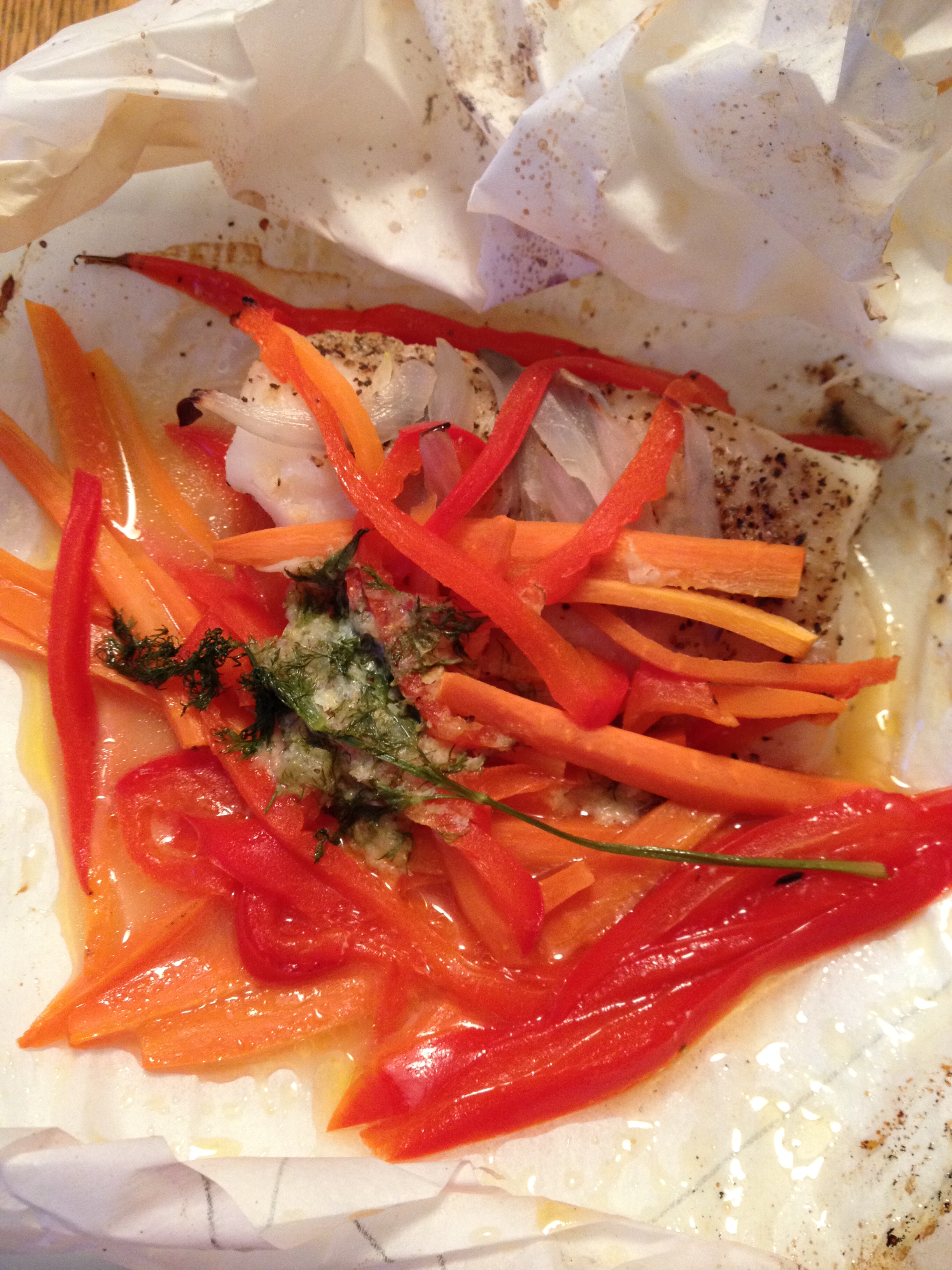
I love to experiment with parchment packets of fish, veggies and flavors. It takes less than 30 minutes from start to finish. Here is my latest based on a recipe from Cooking Light.

  • Preheat oven to 450 degrees F.
  • Take 2 pieces of parchment paper measuring about 15 x 23 inches.
  • Fold each piece in half and draw in half of a heart shape, using most of the paper. Cut shape and unfold.
  • Place a six-ounce fish fillet on one side of each heart shape. I use cod or swai. Any fish will work. Salt and pepper fillets on both sides.
  • Julienne slice 1 1/2 cups vegetables such as red pepper, carrot, and another veggie like snow peas, leeks or shallots.
  • Place half the vegetables over each fillet.
  • In a small bowl combine: 1 1/2 tablespoons softened butter, 1 teaspoon lemon rind, 1 tablespoon lemon juice, 1 teaspoon fresh dill weed, chopped.
  • With a small spatula, place 1/2 of the butter mix over the vegetables.
  • Place a stem of dill over the butter if you like.
Packets Ready for Folding

Packets Ready for Folding

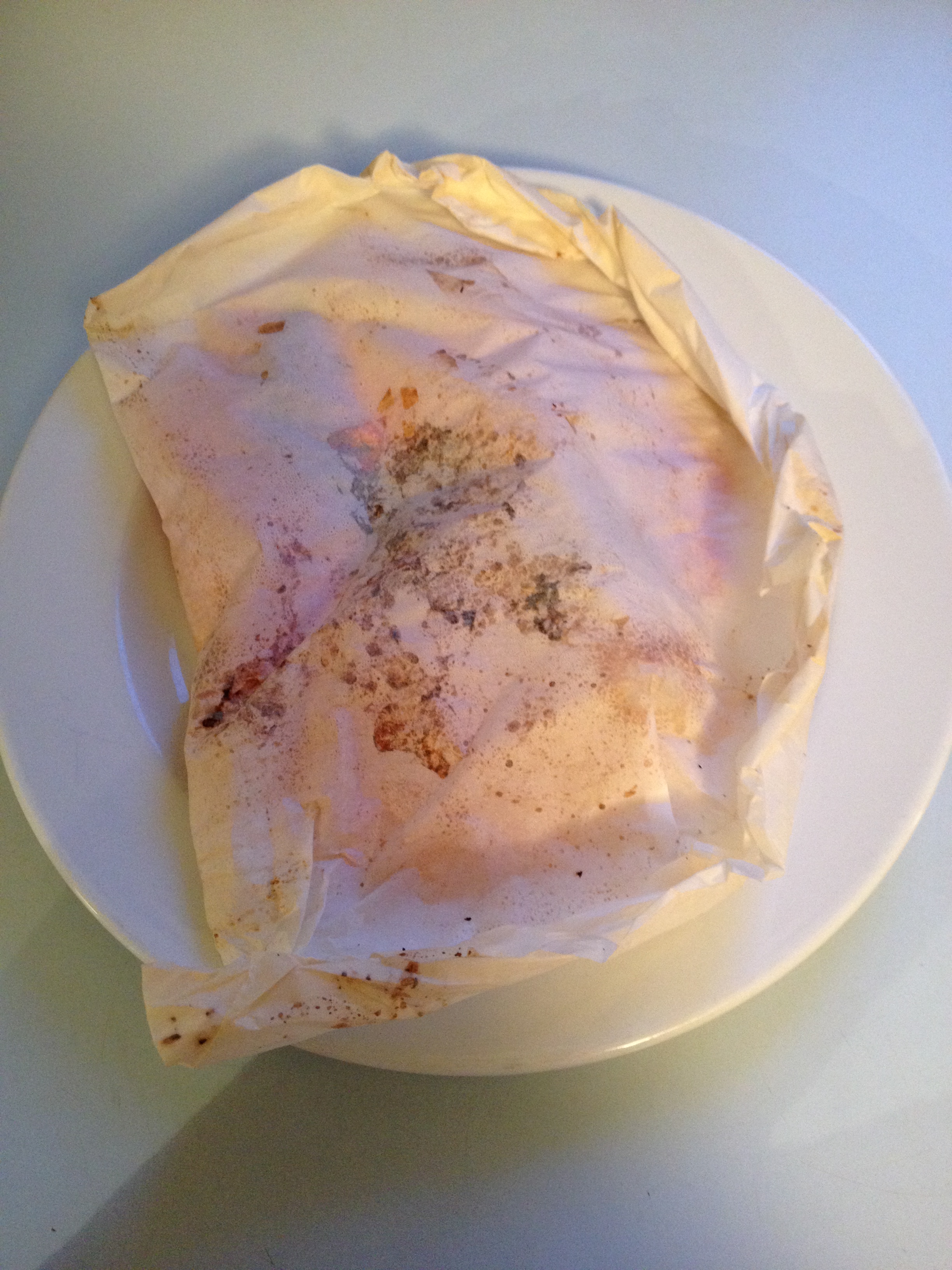
  • Wrap up the parchment packets as follows: Bring remaining half of paper over the fish. Double-Fold the raw edges together tightly to seal, starting at the top and working your way down. At the bottom, twist the tail to tighten the seal.
  • Place packets on a baking sheet. For more folding instructions and photos, see the link below.
  • Bake 15 minutes. Serve in the packets on plates.

Ready for Serving!

Ready for Serving!

For step by step photos on folding these packets go to:

http://www.cookinglight.com/cooking-101/techniques/fish-cooked-in-parchment-00412000070915/page10.html

Pasta alla Marinara alla Americano

Marinara Sauce

Pasta and Marinara Sauce with Italian Turkey Sausage and Grated Parmesan

Pasta alla Marinara is an Italian dish from the Campania area around Naples Italy. All of the ingredients are available in this region. These people immigrated to the US in large numbers and gave us our current love of Italian pizza and tomato sauce.

We have broken some rules with this recipe as you can see above. #1 We served meat with the pasta. #2 Sauce was served on top of the pasta. #3 Grated parmesan was added to the final dish.  We did eat the green salad after the pasta though 🙂

Yes food is a religion in Italy and the rules are endless. As the New York Times articles inform us, the meat is served after the pasta on a clean dish; the pasta is not left to drain in a colander, but is lifted out of the cooking pot and then added to the marinara sauce for final cooking; parmesan is not added to marinara. We did combine the pasta with most of the sauce in the skillet. Otherwise, we followed the specifics of this recipe and Lidia Bastianich’s recommendations.

Attencion! Pay attention to the following points of advice from Lidia Bastianich and Julia Moskin:

  • Make sure the garlic is not yellow or sprouted and is firm and white
  • Only peel and slice the garlic. Mincing the garlic breaks down the cells and releases the sulfurous molecules which give the strong flavor and odor.
  • Look for Cento brand or other San Marzano certified D.O.P. whole plum tomatoes, though this special tomato authenticity is questionable. The San Marzano tomato is only grown near Mt. Vesuvius (think Pompeii) and is only a 60 square mile area. That’s a pretty small area for the millions of cans of “San Marzano certified” tomatoes sold every year. A domestic brand recommended is Redpack.
  • Taste test several canned tomatoes to discover a favorite. Look for tomatoes that are fleshy and juicy, ripe from end to end, naturally ripened with few seeds and with a taste balance of acid and sweet. Whole tomatoes with added water/juice may be better than tomatoes canned with added sauce. The added sauce may make a Marinara too thick, but it is all about the taste!
  • Again, I will only add water to the tomatoes, no stock or wine which “muddies” the taste.
  • I will again only use a small dried whole red chile!
  • Fresh basil only, though I do have the dried oregano on the branches purchased in Greek Town Chicago, which is an intriguing alternative. I will pay attention to look for the fresh basil with smaller leaves such as the small potted plants available.
  • A new additional ingredient to this Marinara is seaweed and sea salt. Alla Marinara means “of the sailor”. The historical references are many, but one is the sailor’s trick for deepening the flavor: Their tomato sauce contained seaweed and sea salts which contain glutamates and produce umami, an element that adds a a rounded satisfying and savory flavor.
  • Look for a lightweight pasta pot with a perforated lid such as the Barilla pasta pot Lidia Bastianich uses. She drains the hot water into the sink, but reserves some water in the pasta pot to prevent sticking. If not, I will cook the pasta al dente and then lift it out of the pasta pot and hold it above the hot steam for a moment before adding it to the simmering sauce for final cooking. “Never, never leave pasta sitting around in a colander. In Italy you could go to jail for that.”
  • Never serve Marinara on top of plain pasta. This is the most important rule! Add the al dente pasta to the sauce to heat through and complete the cooking. Serve the sauce coated pasta on the serving plate.
  • No cheese with Marinara! Never serve cheese with fish or seafood either!!!!
  • The meat will be served after the pasta, though for me, this is not a big deal to combine them at serving. I won’t cook the sausage in the sauce. Marinara can be cooked with fish and seafood, added at the last moments of cooking.

The following is written by Julia Moskin, The New York Times. Adapted from Lidia’s Commonsense Italian Cooking by Lidia Bastianich. Click the link below for a cool video.

Homemade marinara is almost as fast and tastes immeasurably better than even the best supermarket sauce — and it’s made with basic pantry ingredients. All the tricks to a bright red, lively-tasting sauce, made just as it is in the south of Italy (no butter, no onions) are in this recipe. Use a skillet instead of the usual saucepan: the water evaporates quickly, so the tomatoes are just cooked through as the sauce becomes thick.

TOTAL TIME
25 minutes                            

Ingredients

  • 1 28-ounce can whole San Marzano tomatoes,certified D.O.P. if possible
  • 1/4 cup extra-virgin olive oil
  • 7 garlic cloves, peeled and slivered
  • Small dried whole chile, or pinch crushed red pepper flakes
  • 1 teaspoon kosher salt
  • 1 large fresh basil sprig, or 1/4 teaspoon dried oregano, more to taste

Preparation

1. Pour tomatoes into a large bowl and crush with your hands. Pour 1 cup water into can and slosh it around to get tomato juices. Reserve.
2. In a large skillet (do not use a deep pot) over medium heat, heat the oil. When it is hot, add garlic.
3. As soon as garlic is sizzling (do not let it brown), add the tomatoes, then the reserved tomato water. Add whole chile or red pepper flakes, oregano (if using) and salt. Stir.
4. Place basil sprig, including stem, on the surface (like a flower). Let it wilt, then submerge in sauce. Simmer sauce until thickened and oil on surface is a deep orange, about 15 minutes. (If using oregano, taste sauce after 10 minutes of simmering, adding more salt and oregano as needed.) Discard basil and chile (if using).
YIELD: Makes about 3 1/2 cups, enough for 1 pound of pasta
           Originally published with             Marinara Worth Mastering

My husband Dave looks for recipes like the research scientist he is. This Marinara Sauce he found scrolling through the New York Times. Here are the two links which have all the info.

http://www.nytimes.com/recipes/1015987/marinara-sauce.html

http://nyti.ms/MbjajG